
Material
Non-metal quartz, granite, wood, glass or solid surface may be suitable. Metal tops, foil backing and reinforcement at the charging point can prevent charging.
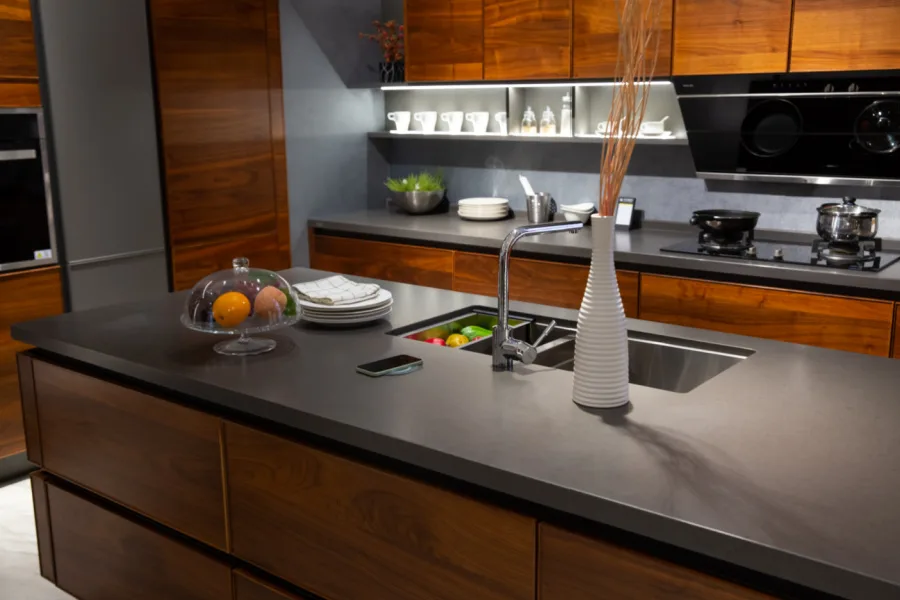
Kitchen countertops · Worktop charging
Keep the charger and cable beneath a suitable quartz, granite or other non-metal countertop. Charge your Qi-enabled phone on a slim resonator pad above.
QB21 / QB31 · 20–50mm surfaces · No charging cut-out required
Start with your surface
Yes, with the right charger and a suitable construction. A worktop wireless charger mounts under the surface and transfers power to a compatible phone above. Material, total thickness, phone case and alignment all matter—test the complete setup before fixing the charger permanently.
Use the surface compatibility checker →Before you buy
Non-metal quartz, granite, wood, glass or solid surface may be suitable. Metal tops, foil backing and reinforcement at the charging point can prevent charging.
QB21 / QB31: 20–50mm (about 0.79–1.97 inches). Measure the whole surface assembly at the exact spot, including backing layers.
Check that the exact phone supports Qi. Case thickness, metal plates, magnetic accessories and placement can affect charging; test your intended setup.
You need underside access, mounting clearance and a suitable power outlet. Keep the charger, adapter and cable away from water and direct heat.
What the installation looks like
The transmitter mounts beneath the worktop. An included 12cm resonator pad stays on top and marks where to place the phone. There is still a power cable underneath and an adapter connected to an outlet.
Buy a standard kit
Both models cover 20–50mm non-metal surfaces and include a resonator pad. The practical difference is mounting.
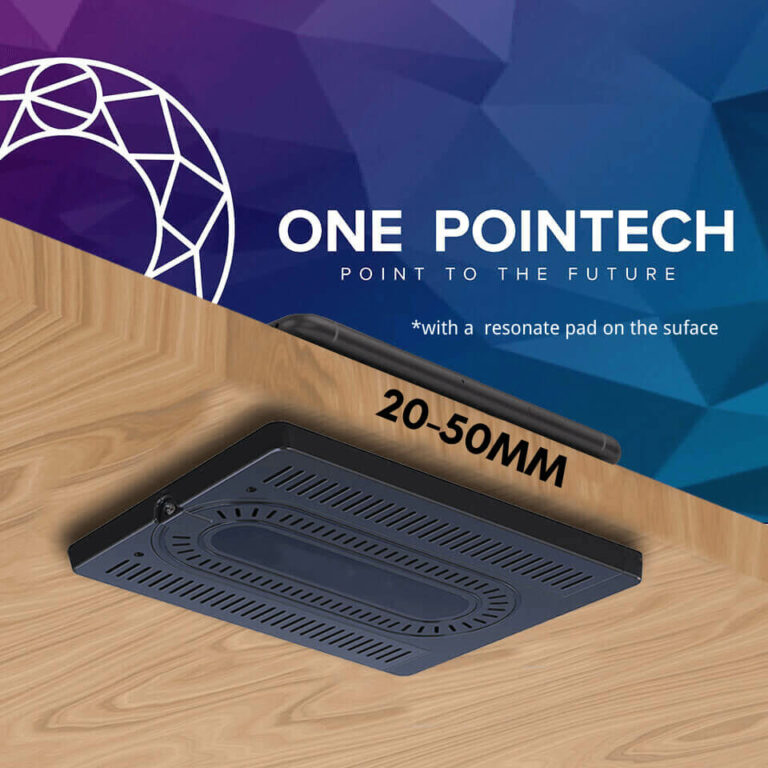
Adhesive mounting
For an existing worktop with a suitable adhesive mounting surface.
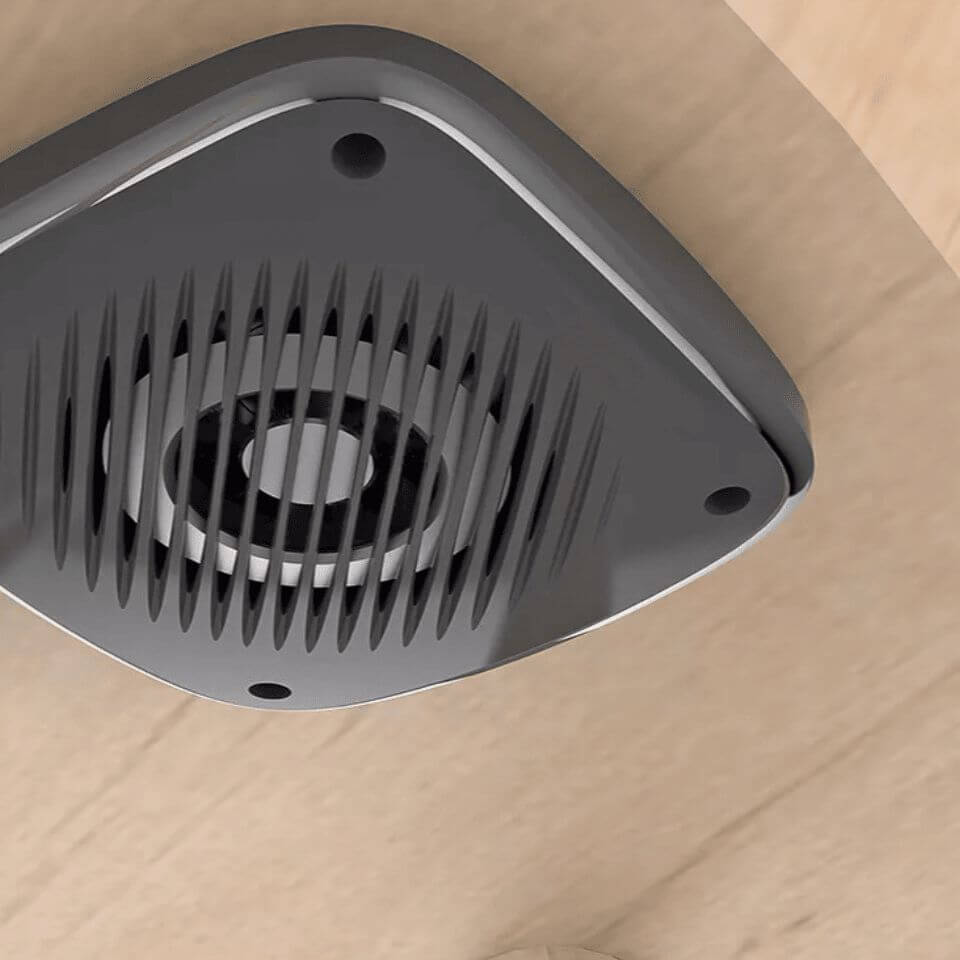
Screw mounting
For installations where secure screw mounting is preferred.
Choose the correct US, EU, UK or AU plug in the shop. Check current price, delivery and package details before ordering.
New countertop or furniture design?
Embedded chargers fit into a planned cut-out or recess. They are an alternative for new kitchens and furniture production, with different installation requirements from through-surface charging.
Kitchen brands · Fabricators · Hospitality
Discuss model selection, mounting, sample evaluation and OEM requirements before choosing a production solution.
Discuss my kitchen project →Start with a sample on the exact surface before committing to a larger installation.
Practical answers
A suitable under-counter charger can charge through non-metal quartz within its specified thickness range. QB21 and QB31 cover 20–50mm surfaces and require a resonator pad on top. Check backing layers and test the complete installation with your phone before permanent mounting.
Granite can be suitable within the charger’s stated thickness range, but stone composition, backing layers and phone cases vary. Measure the full construction at the charging point and test your exact surface.
QB21 and QB31 mount beneath a suitable existing worktop without a charging cut-out. You need access underneath and a power outlet. Embedded chargers are a different installation route and require a cut-out or recess designed for the selected model.
Yes. QB21 and QB31 use an included 12cm resonator pad on top of the surface. The transmitter and its power cable are underneath; this is not a completely bare-surface installation.
QB21 and QB31 support 5W Qi, 7.5W Apple and 10W Samsung charging profiles. They do not provide Qi2 magnetic or 25W charging. Actual performance depends on your phone, case, surface and alignment.
Choose a dry, accessible area away from sinks, cooktops and direct heat. Confirm mounting clearance and power access below. Do not assume the charger is waterproof or suitable for exposure to spills.